
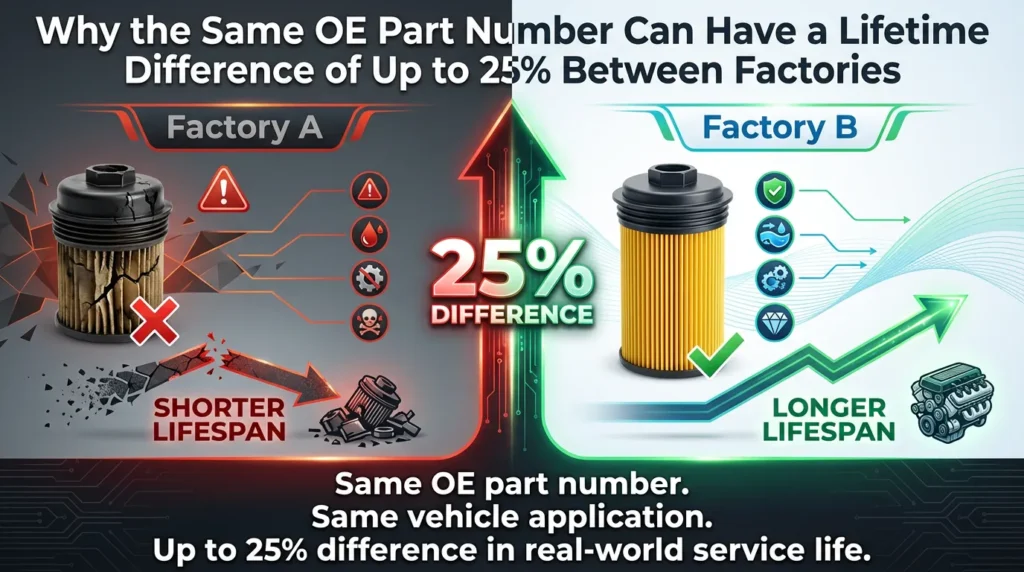
In the automotive aftermarket, a part number is just a label. Two filters can share the exact same OE Part Number, fit the exact same vehicle, yet have a lifespan difference of up to 25%.
Why does this happen? The difference lies in the invisible engineering decisions made on the factory floor.
This technical analysis compares two manufacturing approaches—Factory A (Low Cost) vs. Factory B (OE Standard)—to demonstrate how specific materials and processes directly impact durability and return rates.
Many importers select suppliers based solely on unit price, often choosing “Factory A.” While the filter looks correct on the outside, internal shortcuts compromise performance.
At Beling Filters (“Factory B”), we approach manufacturing with an “OE-Equivalent” mindset. We don’t just copy the dimensions; we match the performance.
We source media from global leaders like Ahlstrom and HV.
We utilize automated injection molding for seals.
We don’t guess; we test.
The data proves that manufacturing precision pays off.
| Performance Metric | Factory A (Low Cost) | Factory B (Beling Optimized) |
| Lifespan | 50,000 miles | 65,000 miles (OE Standard) |
| Return Rate | 15% (High Risk) | <1% (Stable) |
| Efficiency at 30k Miles | 88% | 97% |
| Customer Complaint Rate | 20% | 3% |
By switching to Factory B’s process, the filter gained 15,000 miles of usable life—a 25% increase—without changing the part number.
For technical buyers, the lesson is clear: Material dictates lifespan.
Are you selling “Factory A” quality under a premium brand? It might be time to audit your supply chain.
At Beling Filters, we bridge the gap between aftermarket pricing and OE performance.
We can review your current technical specifications and propose material upgrades that increase lifespan.
Contact Bruce Gong (Key Account Manager)
Email: bruce.gong@belingparts.com
WhatsApp: +86 15057764729
LinkedIn: www.linkedin.com/in/brucegong-beling
Privacy Policy Powered by 2uncle