
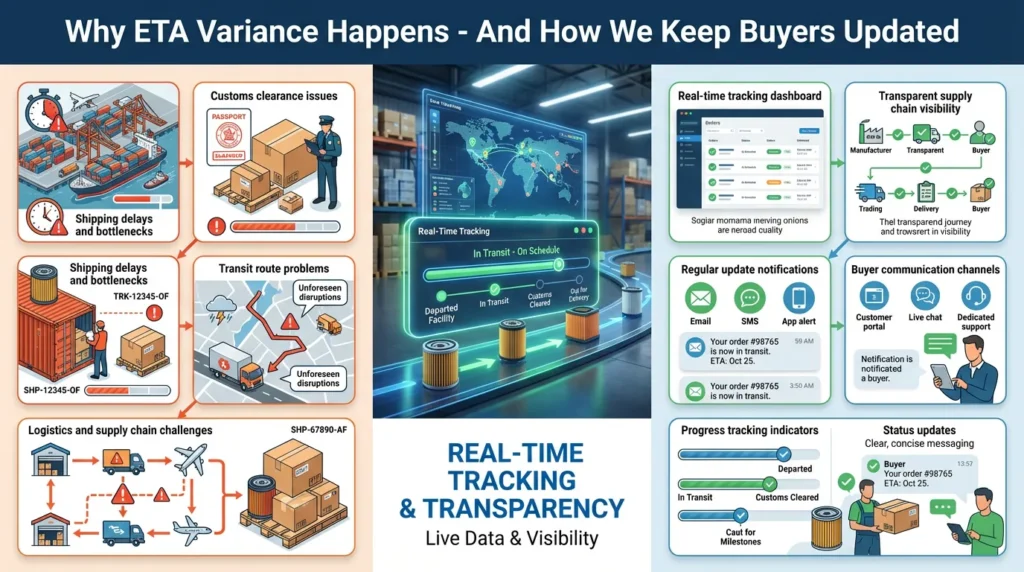
Why ETAs Change in Shipping and How We Inform Buyers

Why ETA Variance Happens in Auto Parts & Filter Shipping - And How We Keep Buyers Updated

In global shipping, few things create more stress for importers than changing ETAs.

You book a container for auto parts and filters.
The route is fixed.
The vessel is confirmed.

At first, the ETA is the 18th.
Then it moves to the 21st.
Then the system simply shows: TBA.

From the importer’s perspective, this looks like chaos and poor planning. But in reality, ETA variance is a built‑in feature of international shipping — especially when routes involve multiple ports, transshipments, and volatile conditions.

What you can control is not the ocean itself, but how you manage information and expectations.

In this article, we’ll explain:

  • Why ETAs change so often in auto parts and filter shipments
  • The key operational reasons behind ETA variance
  • How we track, interpret, and communicate those changes for our buyers
  • Why transparency and proactive updates matter more than promising “perfect” dates

If your current suppliers only send a tracking link and then disappear, this breakdown will show you a very different way of managing ETAs.

  1. ETA Is a Forecast, Not a Promise

The first step to reducing stress about ETAs is understanding what an ETA really is:
a forecast, not a guarantee.

How ETAs Are Generated

Most ETAs you see:

  • Are based on “pro forma” schedules published by carriers
  • Do not fully reflect the latest congestion and operational disruptions
  • May not be updated immediately for weather events, port strikes, holidays, or slow port operations

When a carrier or online system shows an ETA at the time of booking, it is essentially saying:

“If everything goes according to plan and no disruptions occur, we estimate arrival will be on this date.”

That estimate can change multiple times between:

  • Booking confirmation
  • Vessel departure
  • Transshipment at a hub
  • Final port arrival

How We Explain ETA to Buyers

We are very direct with our partners:

  • We emphasize that ETA is dynamic, especially on complex routes.
  • We describe ETA as a moving forecast window, not a fixed deadline.
  • We position our role as:

“We will track the changes for you and share realistic windows, instead of pretending the first date is carved in stone.”

This early expectation-setting helps buyers plan better and reduces frustration when ETAs inevitably move.

  1. Port Congestion and Port Rotation Changes

Two major drivers of ETA variance are:

  1. Port congestion
  2. Port rotation changes by the carrier

These factors are often invisible to importers, but they can significantly impact arrival times.

Port Congestion

Port congestion happens when:

  • Too many vessels arrive in a short period
  • Terminal capacity is stretched
  • Yard operations are slower than planned
  • Customs or inspections are backed up

In such cases, vessels may:

  • Wait at anchorage for a berthing window
  • Stay longer in port than the schedule anticipates

This can add days to the transit time and push ETAs further out.

Port Rotation Changes

Carriers sometimes change the sequence of ports on a service, without changing the vessel or the general route.

For example, the initial rotation might be:

Port A → Port B → Port C

Due to congestion or operational reasons, the carrier may switch to:

Port B → Port A → Port C

Your container has not moved to a different vessel.
The ship is still sailing the same general route.
But your ETA can suddenly jump forward by several days.

How We Handle Port-Related ETA Changes

When we see updated information that indicates port congestion or rotation changes, we:

  • Check the carrier’s system and third‑party tracking tools
  • Confirm the new ETA range
  • Notify buyers with:
    • The revised ETA
    • short explanation (“port rotation change” / “port congestion”)
    • A clear impact statement (e.g., “ETA moved from 18–20 June to 22–25 June”)

This context helps buyers understand that the change is structural, not a sign of bad planning.

  1. Transshipment Risk and Missed Connections

Another major source of ETA variance in auto parts and filter logistics is transshipment.

Many trade lanes use hub ports, where containers are transferred from a feeder vessel to a mainline vessel, or between two ocean services.

What Can Go Wrong at Transshipment Ports

At a transshipment hub, ETA variance happens when:

  • The feeder vessel is delayed, arriving later than expected
  • The connection window is missed, so containers cannot be transferred in time
  • The container is rolled (postponed) to the next available vessel

When this happens, your shipment might:

  • Sit at the hub for several extra days
  • Move to a different vessel with a different ETA
  • Trigger a cascade of changes in downstream arrival timing

How We Monitor Transshipment Points

We actively monitor:

  • The planned transshipment port for each shipment
  • The planned connection between feeder and mainline vessel
  • The carrier’s updates on actual vs planned connection

If we see that:

  • A connection was missed
  • A container was rolled
  • A new vessel or voyage has been assigned

…we don’t wait for the buyer to ask, “Where is my container?”

Instead, we proactively send a message like:

“Your container missed the connection at [Hub Port].
New planned vessel: [Vessel Name]
Revised ETA: [New Date Range].”

This approach keeps the buyer in control and allows them to adjust their planning early.

  1. Weather, Strikes, and Local Events

Some causes of ETA variance are truly outside everyone’s control:

  • Storms and typhoons
  • Heavy seas causing speed reductions
  • Port worker strikes or labor disputes
  • Public holidays affecting operations and customs
  • Local regulatory changes or sudden inspection campaigns

How These Events Affect ETA

These events can impact:

  • Berthing time – vessels wait longer to dock
  • Yard operations – loading and discharge slow down
  • Customs processing – clearance queues lengthen

No shipper, freight forwarder, or factory can prevent these disruptions. But buyers still need to know what is happening and how it affects them.

Our Role in Translating Events Into Expectations

We see our responsibility as translation, not wishful thinking:

  • We avoid promising what we cannot control.
  • Instead, we translate external events into realistic expectations for our partners.

For example:

“Due to a typhoon affecting [Region], the vessel reduced speed and arrival is now expected 3–4 days later. New ETA window: [Dates].”

This keeps the tone honest and practical, while giving the buyer enough information to make decisions.

  1. How We Communicate ETA Changes at Beling Filters

We cannot eliminate ETA variance in auto parts and filter shipping.
What we can do is manage communication so that variance is predictable and manageable.

Our Core Communication Principles

To reduce stress for buyers, we:

  • Share ETA as a range for planning (e.g., “20–25 June”), rather than a single fixed date.
  • Track vessels and containers via carrier systems and third‑party tracking tools.
  • Update buyers when ETAs shift — not only at the last minute or after the delay is obvious.

Our Typical ETA Update Flow

For filter and auto parts shipments, our communication flow looks like this:

  1. Booking confirmed
    • We share the initial ETD (estimated time of departure) and ETA.
    • We clarify that this is a preliminary forecast.
  2. After loading / vessel departure
    • We send:
      • Vessel name
      • Voyage number
      • Container number
    • We confirm the latest ETD/ETA from the carrier.
  3. Before transshipment (if applicable)
    • We check status at the transshipment hub.
    • If everything is on schedule, we confirm that the ETA remains within the planning window.
  4. If ETA changes
    • We send a revised ETA (usually still as a range).
    • We include a brief reason:
      • “Port congestion”
      • “Port rotation change”
      • “Missed connection at [Hub Port]”
      • “Weather delay”
  5. Before arrival
    • We send a pre‑arrival reminder with the latest ETA.
    • This helps buyers arrange local trucking, customs clearance, warehouse labor, and space.

Benefits for Buyers

With this approach, buyers can:

  • Plan receiving and warehouse operations with less guesswork.
  • Schedule local transport and customs brokers more efficiently.
  • Adjust sales and inventory planning before stockouts occur.

Instead of reacting to late containers, they can proactively plan around updated information.

  1. Why Transparency Matters More Than “Perfect ETA”

No supplier or forwarder can guarantee that ETAs will never move.
Anyone who suggests otherwise is ignoring how global shipping really works.

What can be guaranteed is:

  • No hidden surprises
  • No silence when things change
  • No vague “we are also checking” responses after a container is already late

What Buyers Really Want From ETA Management

Most experienced importers of auto parts and filters:

  • Understand that delays happen.
  • Know that storms, strikes, and congestion are part of the business.

What they cannot accept is:

  • Being informed too late, when it’s impossible to adjust.
  • Having to chase suppliers just to get honest updates.
  • Being treated as if they are only a tracking number, not a partner.

By keeping communication open, proactive, and specific, we turn ETA variance from a major stress factor into a manageable planning variable.

  1. Our ETA Communication Method for Filter Shipments

At Beling Filters, we’ve developed a simple but effective ETA update method tailored to auto parts and filter importers.

It includes:

  • Sharing ETA ranges (e.g., 3–5 days windows) instead of single “magic dates”.
  • Distinguishing between carrier‑driven changes and external events.
  • Using a consistent update template so that buyers can quickly scan and understand:
    • Current ETA window
    • Reason for change (if any)
    • Impact on arrival expectations

For example, a typical update may look like:

Subject: ETA Update – Container [Number] – Filters Shipment

Current ETA window: 22–25 July
Change reason: Port congestion at [Port Name] → vessel waited 48 hours at anchorage.
Previous ETA: 20–22 July
New ETA: 22–25 July

Impact: 2–3 days later arrival than initial plan.

This structure helps your team quickly interpret the situation and make adjustments.

  1. ETA Variance Is Inevitable — Chaos Is Optional

In auto parts logistics and filter shipments, ETA variance is part of the reality:

  • Schedules are forecasts, not guarantees.
  • Ports and routes constantly adapt to operational pressure.
  • Weather and local events create unavoidable disruptions.

What is not inevitable is chaos.

Chaos usually comes from:

  • Lack of clarity about what ETA really means
  • No structured process for tracking and interpreting changes
  • Poor or delayed communication from suppliers

When ETA management is handled professionally:

  • Importers see fewer unpleasant surprises.
  • Warehouse and logistics teams can plan around updated ETAs.
  • Sales and inventory management become more data-driven and realistic.

If your current suppliers just send a tracking link and then “go quiet,” it may be time to demand a higher standard of communication.

  1. Want to See the ETA Update Template We Use?

If you’re importing auto parts and filters and struggling with ETA communication, a simple, structured update template can make a big difference.

We can share the exact ETA update email format we use with our filter shipment buyers, including:

  • How we present ETA windows
  • How we explain reasons for changes in a clear, non-technical way
  • How we link updates to operational decisions (warehouse, trucking, sales planning)

You can adapt this template internally, or ask your current suppliers to follow a similar structure. Over time, this will:

  • Reduce unnecessary back‑and‑forth
  • Improve trust between your purchasing, logistics, and sales teams
  • Turn ETA variance from a source of anxiety into a manageable planning parameter

If you want that template or want to align labeling, packing, and ETA communication in one integrated approach for your filter shipments, we’re ready to share practical examples and tailor them to your routes and systems.

More to read

10 Red Flags: Your Automotive Filter Supplier Might Be Dragging Down Your Profits

2026 Global Automotive Filter Market Trends: OEM vs Aftermarket Outlook

7 Brutal Questions to Ask Automotive Filter Suppliers Before You Trust Them

Privacy Policy Powered by  2uncle