Most distributors compare suppliers on three visible factors:
These are crucial. But there is one factor that quietly controls all three:
How transparent your supplier really is.
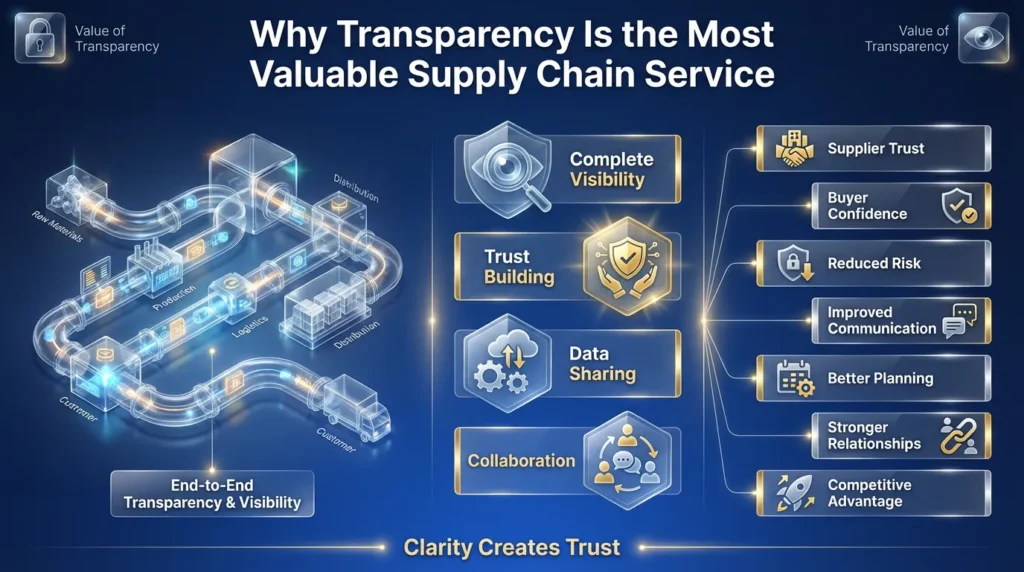
In our experience at Beling, transparency is not “nice communication” or a soft skill. It is a core supply chain service – and in many cases, it is more valuable than a small price difference or a theoretical lead time.
When you run a serious private label automotive filter program, the real question is not only “How cheap is the product?” but:
- “How early will I know if something goes wrong?”
- “Can I trust the dates and data I receive?”
- “Will I be able to manage my own risk, or will I always be reacting too late?”
This article explains what transparency means in practice at Beling, and how it directly affects your cost, risk and ability to grow your aftermarket filter business.
Visibility Is More Valuable Than “Perfect” Lead Time
1.1 Why Perfect Lead Time Is a Myth
No supplier, no matter how strong, can completely avoid:
- Route disruptions
- Canal closures
- Port congestion
- Blank sailings and rerouting
- Sudden capacity shifts
- Peaks in global demand
- Workforce or energy constraints
- Prioritization of certain orders or markets
- Raw material constraints
- Shortages in filter media, steel, plastics
- Supplier closures or force majeure
These risks are built into global supply chains.
What really differentiates suppliers is not whether problems happen, but how early you know about them and what options you are given.
1.2 Transparent vs NonTransparent Suppliers
We see a clear difference:
- A transparent supplier:
- Tells you earlywhen something changes
- Quantifies the impacton dates, quantities, costs
- Offers optionsto mitigate or reduce the impact
- A nontransparent supplier:
- Keeps quiet, hoping the situation will improve on its own
- Provides partial information or generic excuses
- Informs you only when it’s too lateto react
Two programs can have the same production and logistics challenges. The one with transparency will be manageable. The one without it will feel like chaos.
1.3 Why Reliable Visibility Beats “Short but Unstable”
Even a longer but reliable and visible lead time can be better for you than a “short” one that changes every two weeks.
With real visibility, you can:
- Adjust your own order timingearlier
- Protect availability on A itemsthat drive your sales
- Communicate honestly with your customers and avoid lastminute surprises
In other words, predictability can be more valuable than theoretical speed.
Cost Control Starts With Honest Information
2.1 The Visible vs Hidden Cost Equation
Price on the purchase order is visible. But many costs in a distribution business are hidden and only show up later, such as:
- Emergency airfreight and express transport
- Lost sales from stockoutson key references
- Penalties or chargebacksfrom key accounts and tenders
- Extra working capitaltied up in panic overordering
These costs are often far higher than a small difference in unit price – and they frequently come from late or incomplete information from suppliers.
2.2 How Transparency Reduces Hidden Costs
By being transparent about:
- Real production status
- Material risks(e.g. critical media or components under pressure)
- Port and route issues
- Capacity limitson production or freight
…we help you avoid or minimize those hidden costs.
For example:
- If you know two months in advance that one shipment will be delayed by 7–10 days, you can:
- Adjust local replenishment
- Reprioritize stock between branches
- Consider a small emergency topup for A items
- If you only know one week before stockout, your options shrink to:
- Emergency airfreight
- Lost orders
- Broken commitments to customers
Transparent information is the foundation of real cost control.
2.3 Why a Few Cents Are Not the Whole Story
When you compare suppliers only on unit price, you might save:
But, if this comes with poor transparency, you might pay:
- Euros per filter in hidden logistics and lost margin
- Damage to your brand reputationin front of workshops and dealers
This is why we see transparency as a financial service to your business, not just a communication style.
Transparency in Good News and Bad News
3.1 The Real Test of Supplier Transparency
Transparency is easy when everything is fine:
- Production on time
- Routes stable
- No material or capacity issues
Posting nice updates on social media or replying quickly on WhatsApp is simple when there is only good news.
The real test of transparency is when something goes wrong.
3.2 Our Internal Rule at Beling
We follow a simple internal rule:
- Share problems early, not only after we’ve tried everything and lost precious time
- Provide context + options, not just a “sorry, delayed” line
This means that when there is a problem, our goal is not to protect ourselves by waiting and hoping; it is to protect your program by informing you early enough to act.
3.3 What You See When There Is a Delay
When there is a delay affecting your private label orders, we will tell you:
- The exact cause, such as:
- Material delay (e.g. media or steel components late)
- Machine issue (e.g. maintenance, breakdown)
- QC hold (e.g. additional testing needed)
- Route disruption (e.g. port congestion, rerouting)
- Force majeure / external factors
- The updated realistic ETA, not a placeholder date
- Possible mitigation options, such as:
- Prioritizing certain SKUs within the order
- Splitting the shipment (part sooner, part later)
- Alternative routes or timings with different transit times and costs
You may not like the situation, but you can manage it. That is the real value of transparency.
Data, Not Just Words: How We Operationalize Transparency
4.1 Beyond Fast Replies on WhatsApp
We don’t want “transparency” to mean:
- “We answer quickly on WhatsApp”
- “We send some screenshots when you ask”
Those can help, but they are not a system.
We build transparency into our operations and processes so it becomes structured, repeatable and usable.
4.2 Structured Tools We Use for Transparency
Some of the concrete tools we use include:
- Weekly production reports for key customers
- Standardized structure for all open POs
- Status, completion dates, loading windows, ETD/ETA
- Clear status stages from material prep to shipment
- Material Prepared
- In Production
- Quality Checked
- Packed & Palletized
- Booked for Shipment
- Shipped
- Traffic light alerts for orders with risk
- 🟢 On track
- 🟡 Slight risk, still manageable
- 🔴 Needs attention and decision
- Documented change control on specifications and materials
- When critical materials or specs are changed
- Internal validation, traceability and, where needed, customer notification
4.3 Turning Transparency Into Usable Data
Because these tools are structured, your team can use the information for:
- Planning: adjusting POs, priorities and local stock strategies
- Internal reporting: giving management and sales a clear view of upcoming arrivals and risks
- Decision making: choosing between route options, split shipments, or timing compromises
Transparency becomes data and discipline, not just friendly communication.
Better Joint Decisions, Less Blame
5.1 How Shared Visibility Changes the Conversation
When both sides see the same information, the conversation changes.
Without transparency, typical questions are:
- “Why didn’t you tell me earlier?”
- “How can this be delayed if you said everything was fine last week?”
With shared transparency, the conversation becomes:
- “Given this situation, what’s the smartest move now?”
- “Which SKUs should we prioritize?”
- “What can we adjust in our plan to keep availability up?”
5.2 Using Transparency for Joint Planning
With structured transparency, we can:
- Decide which SKUs to prioritizeif production or freight capacity is tight
- Align on realistic launch datesfor new product ranges
- Plan promotionswith true lead time and capacity in mind
- Design safety stock strategiesbased on actual risk, not guesses
For example:
- If we know a route is facing congestion for the next 4–6 weeks, we can:
- Advance production and shipments for critical A items
- Encourage you to build temporary extra safety stock on those SKUs
- If we see a surge in demand for a certain engine family, we can:
- Increase capacity on the relevant filter types
- Communicate lead time changes early to avoid overpromising in tenders
5.3 LongTerm Results vs Pure Price Negotiation
In the long term, this joint decision making, based on shared data, typically creates better results for both sides than a relationship focused purely on price.
You:
- Reduce emergency costs
- Protect your brand and key accounts
- Build more stable sales and margin
We:
- Plan capacity and materials more efficiently
- Avoid constant firefighting
- Build a sustainable, longterm partnership
Transparency is the foundation of this winwin planning.
Trust Is Built on Predictability, Not Perfection
6.1 No Supply Chain Is Perfect
No matter how good the systems are, no supply chain is perfect:
- Machines need maintenance
- Weather can disrupt ports
- Global events can change trade flows overnight
Trying to pretend that nothing ever goes wrong creates fragile relationships.
6.2 What Trust Really Looks Like in Practice
Trust in a supply chain is built when:
- You always know where you stand
- Updates are regular and honest, not just reactive
- Problems are communicated early with options, not late with excuses
When this happens, you can trust the system even when it’s under pressure because:
- Bad news does not come as a surprise
- You have time and data to act
- You see that your supplier is working with you, not hiding from you
6.3 Our Service: Not Just Filters, But Predictable Information
At Beling, we see our service to you as more than just putting filters in boxes and shipping them.
A core part of our value is:
- A predictable flow of informationaround your orders
- So you can manage:
- Inventory
- Cash
- Customer promises
This is why we invest so much in reporting, status tracking and change control – because they are an essential part of the product we deliver.
What This Means When Choosing a Supplier
7.1 Questions That Reveal Real Transparency
When you evaluate a new partner, it’s worth going beyond price lists and sample quality. Ask questions like:
- How often will I receive structured updates?
- Weekly? Monthly? Only when I ask?
- What happens if there’s a delay – how and when will you tell me?
- Do you have a process, or is it ad hoc?
- Can you show an example of your production / shipment reports?
- Is there a standard format? Status stages? Risk flags?
- How do you flag and prioritize atrisk orders?
- Do you use any system like traffic lights or priority rules?
The answers to these questions will tell you more about your future cost, stress level and customer satisfaction than a simple price quotation.
7.2 Why We Made Transparency a Daily Discipline
At Beling, we decided that transparency is not a marketing word.
It is a daily discipline, built into:
- Our production planning
- Our weekly reporting
- Our logistics coordination
- Our communication with your team
Because in today’s global supply chains, the most valuable service we can provide is not just making the product, but making sure you never have to manage in the dark.
If you want a private label partner who treats visibility, data and honest communication as part of the product, that’s exactly what we’ve designed our system to deliver.
Beling – Save Your Time & Cost
Your valuable automotive filter partner since 2008.
Contact Our Team
Bruce Gong – Key Account Manager, Beling Filters
Email: bruce.gong@belingparts.com
WhatsApp: +86 150 5776 4729
LinkedIn: www.linkedin.com/in/brucegong-beling
We’re happy to share how we usually adjust pallets for EU vs Middle East vs Latin America markets, and help you fine tune palletization to your warehouse system.